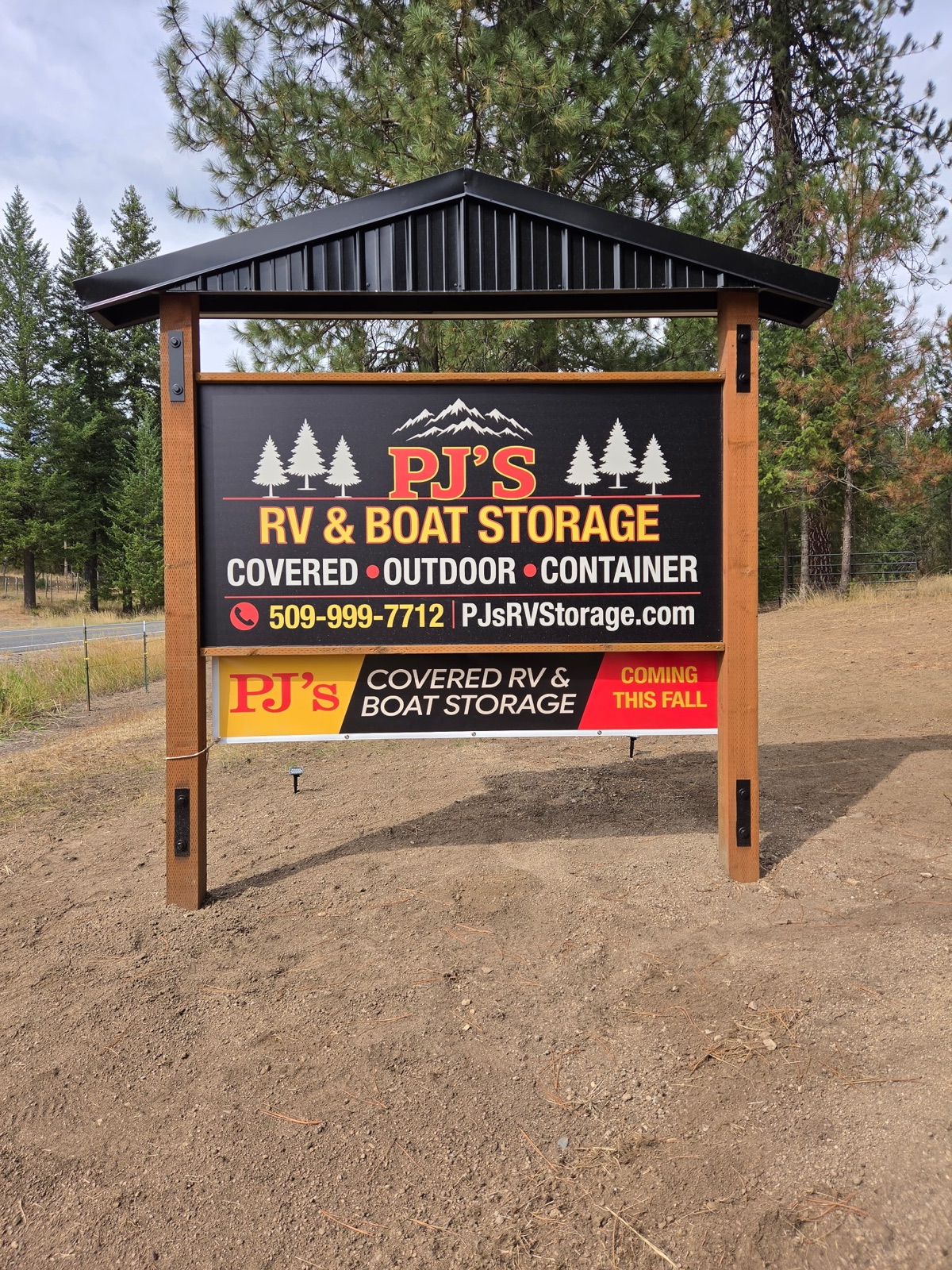
Why Storage Location Matters Around Deer Lake
Large recreational equipment takes planning to move. A boat trip may involve hitching the trailer, loading gear, towing to the lake, launching, retrieving, and returning the entire setup to storage. RV owners face a similar sequence before and after a trip. Keeping equipment near the area where it is used can reduce unnecessary towing and make departures and returns more manageable.
Convenience still needs to be weighed against space dimensions, cost, property access, and the type of cover provided. A nearby space is useful only when the complete RV, boat, or trailer fits and the facility's procedures work with the owner's routine.
LOCAL CONTEXT
Deer Lake is in Stevens County, Washington. The Washington Department of Fish & Wildlife lists it at approximately 1,146 acres and 2,482 feet in elevation, about 14 miles southeast of Chewelah. WDFW identifies it as a year-round fishing lake and provides a public access area with a boat launch. For owners who spend their summers boating, camping, or traveling from Deer Lake, that makes nearby storage a practical consideration rather than simply a place to park equipment.
Three Common Ways to Store Recreational Equipment
Outdoor storage
Outdoor storage is typically the simplest and lowest-cost type. It can work for owners who are comfortable with direct exposure to sun, rain, snow, wind, and airborne debris. The owner remains responsible for covers, maintenance, winter preparation, and any manufacturer-recommended care.
Covered storage
Covered storage places a roof over the vehicle and reduces direct exposure to sun and precipitation. It is not the same as an enclosed building: wind-driven moisture, temperature changes, dust, and open-air conditions can still affect stored equipment.
Enclosed storage
Enclosed storage can be useful for appropriate gear, tools, furniture, and seasonal belongings. Ask about interior dimensions, prohibited items, ventilation, and access before renting. A shipping container should not be assumed to fit an RV or boat; at PJ's, containers are offered for suitable belongings rather than advertised as RV or boat bays.
Covered vs. Outdoor Storage: What Matters Most?
Outdoor
- Cost
- Usually the lower-cost choice.
- Exposure
- Direct sun and precipitation reach the vehicle.
- Best fit
- Owners prioritizing affordability and comfortable managing weather preparation.
Covered
- Cost
- Usually costs more than outdoor storage.
- Exposure
- Reduces direct overhead sun, rain, and snow.
- Best fit
- Owners who value overhead cover for their equipment.
Vehicle condition and value may influence the decision, but there is no universal best option. Think about how long the equipment will sit, how often it will move in and out, the season, and the difference in monthly cost. Covered storage reduces direct exposure; it does not remove the need for maintenance or weather preparation.
Measure Before You Choose a Space
Brochure specifications are a useful starting point, but they may not describe the vehicle exactly as it will be stored. Measure the actual setup from its farthest fixed points, and leave room for safe placement and access. Share the complete length, width, and height with the storage provider before assuming a space will fit.
For an RV
- Height: include roof-mounted air conditioners, vents, racks, antennas, and other permanent accessories.
- Length: include hitch components, rear-mounted spare tires, bike racks, ladders, and other attached equipment.
- Width: measure the widest fixed point in the stored configuration. Retractable features should be positioned as required for storage.
For a boat and trailer
- Length: measure the boat and trailer together, including the trailer tongue, swim platform, outboard motor in its storage position, spare tire, and attached equipment.
- Height: include the windshield, tower, and bimini or other equipment in the position it will remain while stored.
- Width: measure the widest fixed point of the complete trailered setup.
Think Beyond Summer
Storage needs change through the year. A choice that feels simple during frequent summer outings may require more preparation when the equipment will sit for a longer period.
Summer
Consider UV exposure, heat, frequent access, and keeping the trailer ready for regular use. Inspect tires, covers, tie-downs, and exterior seals as appropriate for the equipment.
Fall
Clean the RV or boat, remove food and perishables, and inspect seals and covers before use slows. Decide early whether the equipment will remain accessible or be prepared for a longer stay.
Winter
Freezing conditions and snow are normal considerations in Eastern Washington. RV and boat plumbing systems may need appropriate winterization. Batteries and other systems may also require manufacturer-specific care.
Spring
Inspect tires, batteries, seals, covers, and major systems before regular use resumes. Follow the manufacturer's recommissioning instructions and use a qualified service professional when a procedure is outside your experience.
This overview is not a mechanical winterization procedure. The correct steps depend on the vehicle, boat, engine, plumbing, and installed systems. Follow manufacturer instructions or work with a qualified professional.
Questions Worth Asking Before You Choose Storage
A short, specific conversation with a storage provider can prevent surprises. Bring the complete dimensions and describe how you expect to use the space.
- What does the space cost, and what charges are included?
- Is the space outdoor, covered, or fully enclosed?
- What are the usable dimensions?
- Will my complete vehicle and trailer configuration fit?
- Is the property gated?
- What are the access procedures and permitted access times?
- Are electrical hookups available?
- Is water available, and does it require prior approval?
- Is there a dump station?
- What items or activities are prohibited?
- What are the rental terms and payment requirements?
- How much notice is required to end the rental?
- Does the facility have preparation or condition requirements?
Storage Options at PJ's Near Deer Lake
PJ's offers three straightforward types of storage. All spaces are subject to fit and availability.
OUTDOOR RV & BOAT STORAGE
$50/monthFor customers prioritizing affordability and convenient local storage.
View outdoor storage →COVERED RV & BOAT STORAGE
$125/monthApprox. 11' W × 36' D × 14' H. For customers wanting reduced direct exposure to sun, rain, and snow.
View covered storage →SHIPPING CONTAINER STORAGE
Contact for pricingApprox. 40' × 8' × 8'. For appropriate household items, seasonal belongings, gear, and tools.
View container storage →The property is gated and near Deer Lake. Water or hose access may be available with prior approval. PJ's does not provide electrical hookups or a dump station. Review current pricing or check availability when you know your dimensions.
Frequently Asked Questions
What does RV storage cost near Deer Lake?+
At PJ's RV Storage near Deer Lake, outdoor RV and boat storage is $50 per month and covered storage is $125 per month, subject to availability. Prices at other facilities may differ.
How much is boat storage near Deer Lake?+
PJ's charges $50 per month for outdoor boat storage and $125 per month for covered boat storage, subject to fit and availability. Other providers set their own rates.
Is covered storage better for a boat?+
Covered storage reduces direct exposure to sun, rain, and snow. Whether that is worth the additional cost depends on the boat, its condition, storage duration, budget, and the owner's preferences.
What size RV fits at PJ's?+
PJ's covered spaces are approximately 11 feet wide, 36 feet deep, and 14 feet high. Fit depends on the RV's complete measured dimensions, including fixed accessories, so these bay dimensions do not guarantee fit.
Should I winterize my boat before storage?+
A boat exposed to freezing conditions may require winterization depending on its systems and manufacturer guidance. Follow the manufacturer's instructions or consult a qualified service professional.
Can I store a boat trailer separately?+
Separate trailer storage depends on the available space and the trailer's dimensions. Ask PJ's about current availability before making plans.
Related Resources and Next Steps
Start with the storage options overview, then compare pricing and read the main facility FAQ. The About PJ's page explains the local connection to Deer Lake.
Read next: Covered vs. Outdoor RV & Boat Storage in Eastern Washington
Winter storage guide: How to Prepare Your Boat for Winter Storage Near Deer Lake